Updated: May 2026
Komodo Diving Tour — Planning Your Komodo Diving Trip 2026 | V…
Komodo Diving Tour is a curated Indonesia luxury tourism experience offered by Komodo Divingtour Travel: handpicked routes, vetted operators, transparent pricing, and 24/7 concierge support across Indonesia.
- What makes Komodo Diving Tour a premium experience.
- How Komodo Divingtour Travel curates exclusive access and concierge logistics.
- Routes, seasons, and pricing transparency — no hidden fees.
Planning Your Komodo Diving Trip 2026
What Does Planning a Komodo Diving Trip Involve?
Planning a Komodo diving trip in 2026 involves nine logistical layers: international visa for Indonesia, domestic flight from Bali Denpasar to Labuan Bajo, hotel accommodation in Labuan Bajo for at least one night before and after the trip, dive operator booking with a verified deposit, dive insurance proof, marine park fee payment, gear configuration decisions, current-handling preparation, and a contingency plan for weather delays. This guide walks the entire chain from booking to departure with the specific costs, vendor names and timing windows our reservation team has refined across 4,800 guest dives. Most divers under-plan the Bali transit and the gear configuration. We recommend treating Komodo as a 9-day total trip even if your dive package is only 3 days.
Step 1: Indonesia Visa Logistics for Divers
Most foreign divers enter Indonesia on the Visa on Arrival, which costs 500,000 IDR (approximately $33 USD), is valid 30 days, and is extendable once for another 30 days at the Bali immigration office. Citizens of ASEAN member states do not require a visa for stays under 30 days. United States, Canada, United Kingdom, European Union, Australia, New Zealand, Japan, South Korea and most Gulf state passport holders are eligible for the VOA. The VOA is purchased at the Denpasar airport immigration counter using credit card or US dollar cash. We recommend bringing $50 USD cash as a backup in case the credit card terminal is offline. The e-VOA online application launched in 2024 is faster and saves you the airport queue, costs the same, and is processed in 48 hours.
For divers planning longer expeditions, the B211A Tourism Visa allows 60 days extendable to 180 days, costs approximately $150 and requires a sponsor letter that we can provide upon request. Beware that Indonesian immigration occasionally rejects passports with under 6 months validity remaining at entry, so check your passport expiry before booking flights.
Step 2: Flying from Bali to Labuan Bajo
Labuan Bajo airport (LBJ) is served daily by four Indonesian carriers from Bali Denpasar (DPS): Garuda Indonesia, Batik Air, Wings Air and Citilink. Flight time is 75 minutes. Round-trip economy fares range from $90 to $180 depending on season, with peak July-August fares hitting $220. We strongly recommend booking the morning Garuda flight (typically 06:30 from DPS) because afternoon flights are frequently delayed by Komodo’s afternoon thunderstorm pattern, especially November to March. The dive operator is not liable for missed dive days due to airline delay, so build a one-day buffer on each end of your trip.
Excess baggage for dive gear is allowed by Garuda at 5 kg sports equipment supplement on top of the 20 kg standard, no extra fee. Wings Air and Citilink charge $5 per kg above the 20 kg base. We recommend a hard-shell roller for regulators, computer and mask, plus a soft duffel for BCD and wetsuit. If you exceed 25 kg total, send the surplus by JNE freight from Bali to our Labuan Bajo office in advance for $20 to $30, which is cheaper than airline overage fees and arrives in 48 hours.
Step 3: Choosing Your Labuan Bajo Hotel
Labuan Bajo has roughly 80 hotels ranging from $25 backpacker rooms to $400 cliffside resorts. For divers we recommend the mid-tier $80 to $120 segment because the high-end resorts (Ayana Komodo, Plataran, Sudamala) are 20 to 40 minutes from the Marina Komodo jetty where we depart, while the mid-tier hotels in Kampung Air and downtown Labuan Bajo are 5 to 10 minutes from the marina. Our preferred properties for dive guests are Sylvia Komodo Resort, Sudamala Komodo Resort, Plataran Komodo, and the more central Bayview Gardens, La Cecile, Le Pirate Boatel and Hotel Sunset Hill. Avoid hotels in Wae Cicu beach because the road back to the marina at 05:30 morning departure is unreliable.
Book at least 60 days in advance for July through August. November through February is low season with 30 to 50 percent discounts on most properties. The town has reasonable dining at Mediterraneo, Atlantis, Le Pirate, Kampung Ujung night market and the rooftop bars of the Plataran and Ayana resorts. ATMs accept Visa and Mastercard with $200 USD daily limits at most banks.
Step 4: Booking Your Dive Operator
Selecting a dive operator is the highest-leverage decision in trip planning. We recommend asking five qualifying questions before paying a deposit: how many guides per group, what is your guide-to-diver ratio, what is your minimum logged-dive requirement for Castle Rock, what insurance do you carry, and what is the documented incident rate over the past five seasons. A dive operator that cannot answer those five questions in writing is not the operator you want for Komodo.
Komodo Diving Tour Voyages publishes the answers on our main package page: 1-to-4 guide ratio, 50 logged dives minimum for Castle Rock, full DAN-aligned operator insurance, and a documented incident-free record across 4,800 guest dives over nine seasons. Booking takes 10 minutes once you have your certification card scan, dive insurance proof, last logged dive date and arrival flight details. We hold your slot for 72 hours pending deposit confirmation.
Step 5: Dive Insurance That Covers Komodo
Dive insurance is non-negotiable. The nearest hyperbaric chamber is in Bali, four hours by air ambulance, and the second nearest is in Singapore. We require proof of DAN, DiveAssure or equivalent dive insurance valid for the trip dates before splashing on day one. DAN World annual membership at $35 plus $35 dive coverage is our recommended minimum for occasional divers. DiveAssure offers superior multi-day coverage starting around $80 annual. Travel insurance from credit card programs, Allianz or World Nomads typically excludes scuba diving below 18 metres or above 30 metres, so read the policy fine print carefully.
Step 6: Marine Park Fees and Permits
Komodo National Park requires every visitor to carry a valid park entrance permit at 250,000 IDR per day for foreign visitors, plus a 25,000 IDR per dive concession fee, plus a one-time 10,000 IDR camera permit for housed cameras. Indonesian nationals pay 5,000 IDR per day. The fees are bundled into the published price of every Komodo Diving Tour Voyages package, so you do not pay anything at the dock. We provide a printed receipt for each fee and a copy of the digital ranger system entry log.
Step 7: Gear Configuration Decisions
The single most important gear decision for Komodo is your dive computer. Komodo dives are multi-level, current-driven and frequently extend bottom time at the safety stop while drifting. A dive computer with conservative algorithm settings (Suunto RGBM, Shearwater, Garmin) is essential. The second decision is regulator: DIN over yoke for cold-water reliability, with octopus secondary, SPG and a redundant air source for the southern park’s cold thermoclines. Third decision: wetsuit thickness. Central park 3mm full-length is adequate. Southern park needs 5mm full-length with hood and gloves October to March.
Bring your own mask, fins and computer at minimum. Rent the BCD, regulator and wetsuit only if you cannot pack them. Komodo currents are not the place to discover that a rental BCD has a sticky inflator. Pack a spare mask strap, computer battery (or a charged spare computer), regulator mouthpiece and at least three SMBs with spool. The current-driven drift profile means SMB deployment from depth at safety stop is mandatory on every dive.
Step 8: Current-Handling Preparation
If your last logged dive was on a calm reef in the Caribbean or the Mediterranean, take a refresher pool session before flying to Labuan Bajo. Practice negative-entry, current-hook deployment, SMB deployment from 5-metre depth, and lost-buddy procedure. Komodo does not forgive a six-month layoff. We can arrange a refresher dive at our Labuan Bajo training pool the day before your tour for $35, which we strongly recommend if you have not dived in over 12 months.
Step 9: Weather Contingency and Buffer Days
Komodo’s wet season runs November to March with afternoon thunderstorms that can scrub afternoon dives or postpone day-trip departures. Even in dry season April to October, the southern park can have 2 to 3 metre swell that closes Manta Alley and Cannibal Rock for safety. Build a contingency buffer of one extra day in Labuan Bajo on the back end of your trip. We will reschedule scrubbed dives within the contingency window at no charge. If you have no contingency and weather scrubs day three, we credit a future booking valid 36 months but cannot reimburse cash.
For tier and price comparison see our Komodo Diving Tour package page. For dive site detail see our guide to Komodo’s top 15 dive sites. For current safety preparation, see our Diver’s Guide to Komodo Currents.
Start your Komodo planning today. Email bd@juaraholding.com or WhatsApp +62 811 3941 4563 with your target month, certification and dive count, and we will send a custom 9-step planning packet with hotel recommendations, flight timing and gear checklist.
What to Expect on a Komodo 3-Day Diving Trip
For the discerning traveler with limited time, a 3-day, 2-night liveaboard is the most efficient and immersive way to experience the core of Komodo National Park. This condensed itinerary is meticulously designed to showcase the region’s diverse underwater typography and marine life, balancing world-class diving with the essential topside experience of seeing the Komodo dragons. It is a concentrated expedition, not a compromised one.
A Typical Itinerary Breakdown
While itineraries are always subject to weather and current conditions, a premium 3-day journey follows a logical geographical progression to maximize your experience and minimize travel time between sites.
- Day 1: Central Komodo & Acclimatization. Upon boarding in Labuan Bajo, you’ll receive a comprehensive vessel and safety briefing before cruising to the central park region. The first dives are typically at sites like Sebayur Kecil or Siaba Besar. These locations offer calm conditions, ideal for a check-out dive to fine-tune buoyancy and equipment. Expect vibrant coral gardens, an abundance of reef fish, and a high probability of encountering green sea turtles and white-tip reef sharks. The day concludes with a sunset dive or a relaxing evening at anchor.
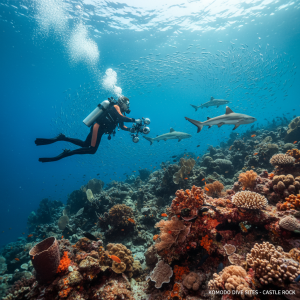
- Day 2: Northern Apex & Pelagic Action. The second day is dedicated to the park’s northern sites, renowned for high-voltage drift dives and encounters with large pelagic species. We navigate to legendary spots like Castle Rock and Crystal Rock. These submerged pinnacles act as magnets for marine life, attracting giant trevallies, schooling barracuda, and grey reef sharks. These are advanced dives where understanding currents is key, and our expert guides ensure you are positioned perfectly to witness the action. A visit to one of the top 15 dive sites in Komodo, Batu Bolong, is often a highlight of this day.
- Day 3: Rinca Island Dragons & Final Dives. The final morning involves a land excursion on Rinca Island for a guided trek to observe the Komodo dragons in their natural habitat. Following this, one or two final dives are conducted in the central or southern part of the park, perhaps at a manta cleaning station if conditions permit. After the last dive, the vessel begins its journey back to Labuan Bajo, allowing ample time to wash equipment and relax before disembarking in the late afternoon.
Onboard Life and Inclusions
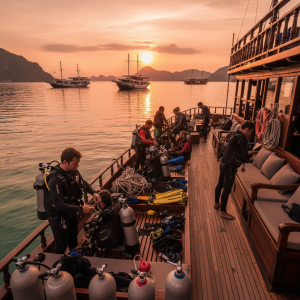
Aboard a premium vessel, the experience between dives is as curated as the diving itself. Expect air-conditioned private cabins with en-suite facilities, chef-prepared meals blending Indonesian and Western cuisine, and a dedicated crew attending to your needs. All logistical details, including the mandatory komodo national park fees, are typically handled by the operator, ensuring a seamless journey. Daily schedules revolve around dive briefings, expertly guided dives, and generous surface intervals for relaxing on the sun deck or reviewing underwater photography.
This 3-day expedition is a powerful snapshot of Komodo’s majesty. Our meticulously planned Komodo diving tours are crafted to deliver the most profound experience possible within this timeframe, combining exhilarating dives with the comfort and service you expect. We manage the details so you can focus on the adventure.
How to Choose a Dive Operator in Labuan Bajo
The rapid growth of Labuan Bajo has led to a proliferation of dive operators, ranging from budget-friendly day boats to world-class luxury liveaboards. For the discerning diver, selecting the right operator is the single most important decision in planning your trip. The choice dictates not only your comfort and enjoyment but, most critically, your safety. Vetting an operator requires looking beyond marketing materials and focusing on a specific set of criteria that separate the exceptional from the average.
Key Vetting Criteria for Premium Operators
A superior dive operation is defined by its unwavering commitment to safety, expertise, and client experience. When evaluating your options, consider the following non-negotiable standards:
- Safety Protocols and Equipment: A premier operator will proudly display its PADI or SSI 5-Star rating. Their commitment to safety is evident in their equipment: well-maintained Scubapro or equivalent gear, regularly serviced Bauer compressors with air purity certificates, and a fully-stocked, comprehensive oxygen and first-aid system. Ask about their emergency action plan and their direct line of communication to the local hyperbaric chamber. This is not a detail to be overlooked.
- Guide Expertise and Ratios: The quality of your dive guide is paramount in Komodo. The best operators employ experienced, permanent local guides who possess an intimate, multi-year understanding of the park’s complex currents and tidal patterns. Inquire about the guide-to-diver ratio. A premium service will maintain a strict 4:1 ratio or better, ensuring personalized attention and enhanced safety underwater.
- Vessel Quality and Itinerary Philosophy: The vessel is your home, dive platform, and restaurant. Look for purpose-built liveaboards, not converted fishing boats. Key features include spacious, air-conditioned cabins with en-suite bathrooms, a dedicated camera room with charging stations, and ample shaded and sun-exposed deck space. Furthermore, a top-tier operator crafts dynamic itineraries based on tides and conditions, actively avoiding the crowded “rush hour” at popular sites like those on our Komodo dive sites guide.
- Transparency and Inclusions: A reputable company is transparent about all costs. Their packages should clearly state what is included, from airport transfers and meals to park and port fees. Be wary of operators with a low base price who then add numerous surcharges. Comprehensive diving insurance should be mandatory for all guests, a policy that reflects a serious approach to safety.
Operator Comparison at a Glance
| Feature | Standard Operator | Premium Operator |
|---|---|---|
| Guide Ratio | 6:1 or higher | 4:1 or lower, often better |
| Vessel | Basic Phinisi, shared facilities | Purpose-built vessel, en-suite cabins, A/C |
| Safety Equipment | Basic O2 Kit | Comprehensive O2, satellite phone, detailed EAP |
| Itinerary | Fixed, follows the crowds | Flexible, tide-dependent, seeks unique timings |
| Inclusions | Often excludes park fees, gear, transfers | All-inclusive pricing structure |
Choosing an operator is an investment in your safety and the quality of your experience. We have built our reputation on exceeding these premium standards. Our Komodo diving tour packages are designed to eliminate the uncertainty and due diligence from your planning, offering a vetted, world-class platform for exploring the park.
Essential Packing List for Your Komodo Diving Trip
Packing for a Komodo liveaboard trip is an exercise in strategic minimalism. With limited space on board and a focus on diving, it is crucial to bring only what is necessary for safety, comfort, and enjoyment. A well-prepared packing list ensures you are ready for variable water temperatures, strong sun, and life on the open water. This guide covers the essentials for the discerning diver, addressing the question of what to pack for a seamless expedition.
Dive-Specific Gear and Documentation
While we provide high-quality, well-maintained rental equipment, many experienced divers prefer the comfort and familiarity of their own gear. Regardless of your choice, certain items are non-negotiable.
- Core Dive Gear: Your mask, fins, and dive computer are essential personal items. We strongly recommend a 3mm to 5mm full-length wetsuit. Water temperatures can vary significantly, from 28°C in the north to as low as 20°C in the south, making a versatile wetsuit crucial.
- Safety Equipment: A surface marker buoy (SMB or DSMB) and a reef hook are mandatory for every diver in Komodo. The currents make these essential safety tools, not optional accessories. A dive torch is also required for any night dives.
- Critical Documentation: You must bring your dive certification cards and logbook. Most importantly, you will be required to show proof of a comprehensive diving insurance policy; you will not be permitted to dive without it. Ensure your passport has at least six months of validity, and be familiar with the current Indonesia visa on arrival policy for your nationality.
Onboard and Onshore Essentials
Life on the boat is casual. Comfort and sun protection are the primary considerations for your non-diving time.
| Category | Item | Notes |
|---|---|---|
| Documents | Passport & Visa | Min. 6 months validity. Check visa requirements. |
| Dive Certifications & Logbook | Physical and digital copies recommended. | |
| Diving Insurance Policy | Mandatory. Have policy number and emergency contact accessible. | |
| Apparel | Swimwear & Rash Guards | Multiple sets are useful for rotating between dives. |
| Lightweight Clothing | T-shirts, shorts, and casual evening wear. | |
| Windbreaker or Light Jacket | Essential for breezy evenings or after a long day of diving. | |
| Sturdy Footwear | For the Komodo dragon trek on Rinca or Komodo Island. | |
| Health & Misc. | Reef-Safe Sunscreen | High SPF, non-oxybenzone formula to protect the reefs. |
| Personal Medications | Including any preferred seasickness remedies. |
Proper preparation is the first step toward a successful expedition. Our pre-trip communications provide a detailed checklist and answer any specific questions you may have. When you book a Komodo diving tour with us, we ensure you arrive fully prepared, allowing you to immerse yourself in the experience from the moment you step on board.
A Diver’s Guide to the Currents of Komodo National Park
The currents of Komodo are the life force of the ecosystem. They are the reason for the staggering biodiversity, the vibrant coral health, and the thrilling pelagic encounters that define the region. For the prepared and well-guided diver, these currents are not an obstacle but the main event—an exhilarating ride through one of the world’s most dynamic marine environments. Understanding the forces at play is key to appreciating and safely navigating these powerful waters.
The Engine: The Indonesian Throughflow
Komodo National Park is situated at a critical choke point in the Indonesian Throughflow, a massive volume of water moving from the Pacific Ocean to the Indian Ocean. This constant flow is squeezed between the islands of Flores and Sumbawa, accelerating as it passes through the channels and straits of the park. This creates nutrient-rich upwellings that feed the entire food chain, from plankton to manta rays and sharks. The result is a complex system of drift currents, downcurrents, and eddies that make every dive unique.
Tides and Seasons: Planning for Success
Navigating Komodo requires a deep understanding of both tidal patterns and seasonal shifts. A premium operator does not follow a fixed schedule; they plan every dive around the tides to ensure optimal and safe conditions.
- Tidal Influence: The strength of the current is dictated by the lunar cycle. During spring tides (new and full moons), currents are at their strongest, offering the most dramatic action at sites like Batu Bolong. During neap tides, the currents are milder, allowing for exploration of sites that might otherwise be inaccessible.
- Dry Season vs Rainy Season: The komodo diving season influences conditions significantly. The dry season vs rainy season debate is about trade-offs. The dry season (April-November) generally offers calmer seas and excellent visibility. The rainy season (December-March) can bring surface chop and reduced visibility in the north, but it is the peak season for manta rays congregating at cleaning stations in the central and southern areas of the park.
Essential Techniques and Safety Protocols
Diving in Komodo demands respect for the ocean and adherence to strict safety protocols. This is not a destination for inexperienced or unguided divers. Essential equipment includes a high-quality SMB/DSMB, a reef hook for stationary observation in strong currents, and a reliable dive computer. Techniques like negative entries are often required to quickly descend below surface currents. Above all, the most critical safety factor is your guide. Their expertise in reading the water and conducting thorough briefings is non-negotiable. It is also why comprehensive diving insurance is mandatory, as it ensures access to facilities like the hyperbaric chamber in Labuan Bajo should an emergency arise.
The currents are what make Komodo a world-class diving destination. With our expert guides, who have spent years mastering these waters, you can confidently and safely experience the thrill. Our Komodo diving tours are built around a deep respect for these currents, using their power to reveal the very best of the park’s underwater wonders.
Navigating Your Arrival: Labuan Bajo Airport (LBJ) to Your Dive Center
Your journey to the pristine waters of Komodo begins the moment your flights to Labuan Bajo (LBJ) touch down. A seamless, stress-free transfer from Komodo Airport to your liveaboard or hotel is the first step in a well-orchestrated expedition. For the discerning traveler, pre-arranged logistics are paramount, ensuring you can transition from air travel to vacation mode without delay or complication. Understanding the arrival process and transfer options allows for a smooth start to your adventure.
Arrival at Komodo Airport (LBJ)
Komodo Airport (LBJ) is a modern, relatively small facility designed for efficiency. Upon deplaning, you will proceed to a compact baggage claim area. For international travelers requiring it, the Indonesia visa on arrival counter is typically straightforward, though we recommend handling visa requirements in advance where possible. Once you have your luggage, you will exit into the main arrivals hall, which is where your onward journey begins. The entire process from landing to exiting the terminal is generally swift.
Transfer Options for a Seamless Connection
While several transfer options exist, they vary significantly in convenience and reliability.
- Pre-Arranged Private Transfer: This is the standard for any premium travel experience. A representative from your liveaboard operator or hotel will be waiting for you in the arrivals hall, holding a sign with your name. They will assist with your luggage and escort you to a private, air-conditioned vehicle. This eliminates any need for negotiation or uncertainty and takes you directly to the harbor for your liveaboard departure or to your labuan bajo accommodation.
- Official Airport Taxi: The airport has an official taxi counter where you can purchase a fixed-price voucher to your destination. This is a reliable option if a private transfer has not been arranged, though you may experience a short wait during peak arrival times.
- Hotel Shuttles: Some of the higher-end hotels in Labuan Bajo provide their own complimentary or paid shuttle services. This must be arranged directly with the hotel in advance of your arrival.
Logistics, Timing, and Recommendations
Labuan Bajo town and its main harbor are conveniently located just a 10- to 15-minute drive from the airport. However, timing is still a key consideration. Most liveaboards have a set departure time, typically between 10:00 AM and 1:00 PM. We highly recommend scheduling your flight to arrive at least two to three hours before your boat’s departure to account for any potential flight delays or baggage issues. For an even more relaxed start, consider arriving the day before your trip begins. This allows you to acclimatize, recover from your journey, and explore the burgeoning town of Labuan Bajo.
A smooth arrival sets the tone for your entire trip. All of our Komodo diving tour packages include complimentary, private round-trip airport transfers. Our team will meet you upon arrival, handle all your luggage, and ensure you are comfortably transported to the vessel, beginning your luxury experience from the very first moment.